
KILLER REALM JOURNAL · GUIDES · 2026-11-20
AalAhwa beginner’s guide: choose a game, find a table and make your first moves
A practical introduction to Domino, Tawla, Estimation and Chess, including the difference between internet matchmaking and same-Wi-Fi play.
By Killer Realm Game Lab · Source-checked 20 November 2026
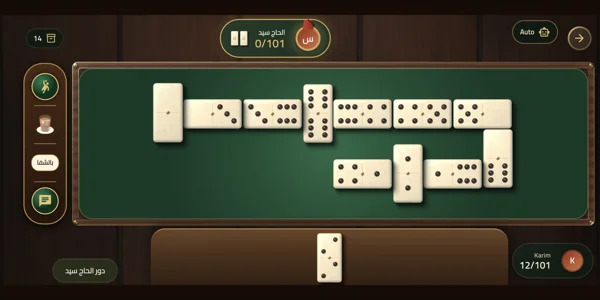
Begin with the table you want, not a room code
AalAhwa brings Domino, Tawla, Estimation and Chess into one Egyptian café setting. The most useful first decision is which game you want to learn. Play Online opens a game selection panel; each game then has its own setup and connection choices. A room code is for meeting particular people, not a requirement for every online session.
If you are learning the controls, start with a local game and bots. You can examine the board without also troubleshooting another phone’s connection. When you are ready for people, choose internet play or the same-network option deliberately: they solve different problems.
Internet play and same-Wi-Fi play are separate routes
Internet play connects through our multiplayer service. Join Random is the route for meeting available players without sending them a private code. Creating or joining a room is the better choice when you already know who should be at the table. A same-Wi-Fi session is for devices on the same local network and follows the local lobby flow; sharing a Wi-Fi name with someone in another location does not make that connection local.
In the current testing implementation, random matchmaking offers a bot-fill option and a humans-only option. Bot fill uses a five-minute deadline measured from the first entrant. An early-start request becomes available after 30 seconds; where several people are waiting, they must agree to start early with bots. Humans-only does not silently turn into bot play: after the waiting interval, the lobby asks for agreement. These are testing-release rules, so use the options shown in your installed version rather than treating this guide as a live server-status page.
Domino: check the variant before choosing a tile
Egyptian Domino and American All Fives share matching numbers but reward different decisions. In Egyptian rules, a tile must fit an open end. If you cannot play, draw until a playable tile is found or the bank is empty; then passing becomes relevant. Going out scores the opponent’s remaining pips. In a blocked round, the lower pip total wins the difference; an equal total gives no points.
American All Fives adds scoring when the exposed ends total a multiple of five and uses the first double as a spinner. This means a move that simply reduces your hand is not always the best scoring move. Read the variant name before applying advice from another Domino table.
The current client supports tapping a legal tile or dragging it toward a legal endpoint. Glowing placement previews show where it can go. If a drop is not accepted, the tile returns to the hand. For a first session, use the highlighted legal positions rather than trying to infer the destination from the artwork alone.
Tawla: the house variant matters
AalAhwa’s 31 and Mahbousa tables are not interchangeable. In 31, all fifteen checkers begin on the starting point, opposing checkers block landing, and there is no hitting or pinning. The first checker must advance into the far quarter before the others can leave. Mahbousa uses the standard starting arrangement and allows a single opposing checker to be pinned until the covering checkers move away.
For both variants, doubles provide four uses of the die. The engine checks how many dice can legally be used, including the larger-die rule when only one is usable. A move looking geometrically possible does not make it legal for the complete turn. Start by following the game’s legal-move feedback and selected variant.
Estimation and Chess: know the immediate objective
Estimation uses four seats and thirteen cards per player. In a normal round, the auction determines a caller and trump, then the other players estimate their trick totals. Your aim is to meet your estimate, not to take every trick indiscriminately. The final estimate cannot make the table’s total exactly thirteen under the implemented house rules. Fixed-trump rounds change the order, so read the prompt before bidding.
Chess has two opposing seats and legal move validation. On a first game, concentrate on whose turn it is and the available destinations before exploring cosmetic or social controls. Neither an avatar nor a board skin changes the rules of the selected game.
If the connection drops
Give the reconnect flow a chance before starting a different table. A temporary disconnect and an intentional departure are different events. The current testing build can also move a lone player’s bot game into saved offline play after its return window. That is a change of mode, not a second online room; see our reconnect development story for the distinction.
About this guide
Written from the studio’s current game-rule engines, setup screens, lobby and Domino input implementation, checked on 20 November 2026. The screenshot is our own. This is a code-verified introduction, not a claim that every device or network was retested for this article. For current download and testing access, visit AalAhwa.